


🎬Gmail Action
Send emails automatically from your own Gmail account whenever an automation runs.


Send emails automatically from your own Gmail account whenever an automation runs. Use it for things like a welcome message, a status update to a teammate, or a reminder, all sent through a Gmail account you have connected to your workspace.
Note: You need a Gmail account to connect, and you add it once as an Integration. If you don't use Gmail, use the Send email action instead (see Send Email Action).
How to Set Up the Gmail Action
1. Add the action to an automation
- Open an app, then go to Automations.
- Create a new automation (+ Automation), or open an existing one.
- Choose the trigger you want, and add any conditions. New to automations? See Getting Started with Automation.
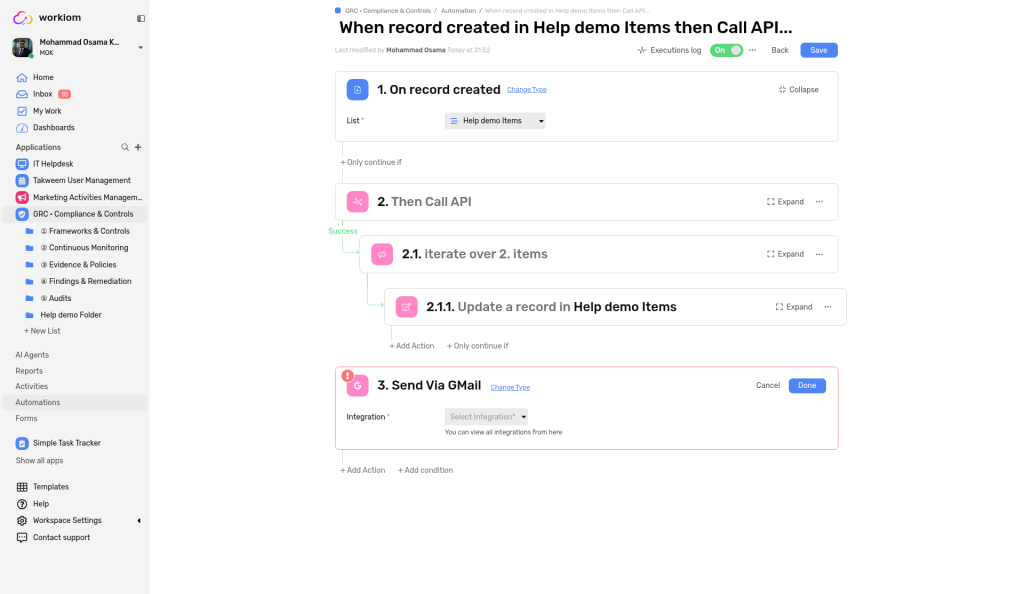
- Select + Add Action. In the Choose the action grid, choose Send Gmail (Use Gmail mail provider). The step is titled Send Via GMail.
2. Connect your Gmail account
- Open the Integration dropdown (Select Integration). It lists the Google accounts already connected to your workspace, plus New Integration.
- To add a new account, choose New Integration, then select Allow when Google asks for permission.
- The other fields stay hidden until you choose an integration.
- After you choose an integration, Edit Integration appears next to the field. The helper text under the field says you can view all integrations from there.
3. Choose who the email is from and who receives it
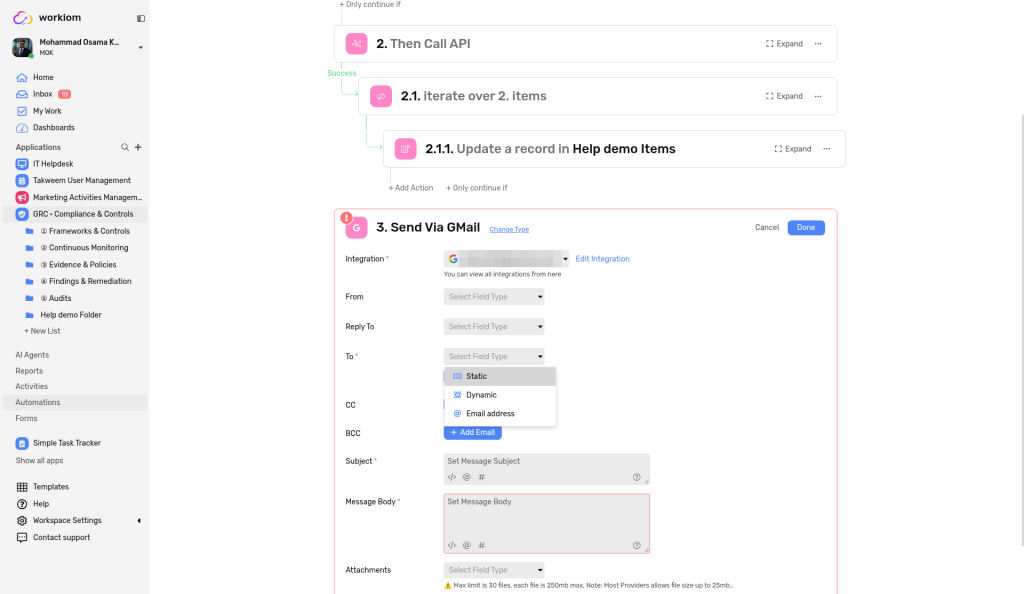
The From and To fields each have a Select Field Type dropdown with three options: - Static: a fixed value that stays the same on every run. For From, this is a fixed user in your workspace. - Dynamic: a value taken from the record or a previous step, so it can change on each run. For From, examples include a user related to the record that triggered the automation, such as Creator, Last modifier, Assignee, or Owner. - Email address: type the address yourself.
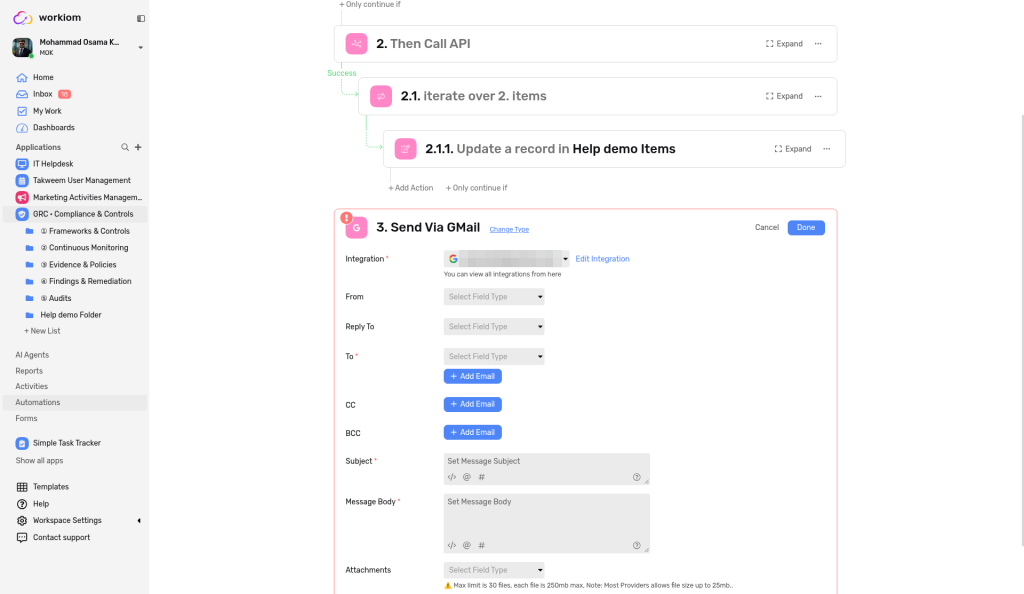
Then fill in the fields: - From: who the email is sent as. - To (required): the recipient. Select + Add Email for each extra recipient. - CC and BCC: select + Add Email to add recipients in copy or blind copy.
4. Write the message
- Subject (required): the subject line of the email.
- Message Body (required): the content of the email. You can write plain text, or use the </> button to work with HTML.
- Both boxes also have @ and # buttons and a ? help icon.
- In the Message Body, type # to pick a Static List field value from the trigger or a previous step. The value is inserted into the email body.
- In the Message Body, type @ to see your workspace's users and insert a user's name. It uses a user from the trigger or a previous step, for example from a user field.
- Attachments (optional): this field also has a Select Field Type dropdown. Under the field, the helper note shows the maximum: 30 files, up to 250mb each. It also says that most providers allow files up to 25mb.
5. Save the action
Select Done, then select Save in the automation editor. Use Change Type at the top of the step if you want to swap the Gmail action for a different action. Cancel closes the step.
Things to Know
- Needs an integration: the Gmail action only works with a connected Gmail integration, and the other fields stay hidden until you choose one.
- Sender address: only email addresses on the same domain as the Gmail account you connected can be used as the sender.
- Expired connection: if the Gmail connection has expired, a warning appears under the Integration field. A workspace owner or super admin can renew it from the integration's edit page.
Use Case
- Business use case: A support request is created in your Requests app. The automation sends an email to the request's Assignee (Dynamic) and puts the request details in the Message Body.
- Simple use case: When you update a task, the automation emails you a copy of the change (Email address) so you have it in your inbox.
💡 Tip: Use Dynamic for To when the right person depends on the record. The same automation then reaches a different person for each record.
Need help? Reach out to our support team or check out the full guide for Getting Started with Automation.