


Bar Chart
A bar chart is a graph that uses rectangular bars to show the values of different groups. The length or height of each bar is proportional to the value it represents. Use them to group and compare your data sets.


Creating a Bar Chart widget
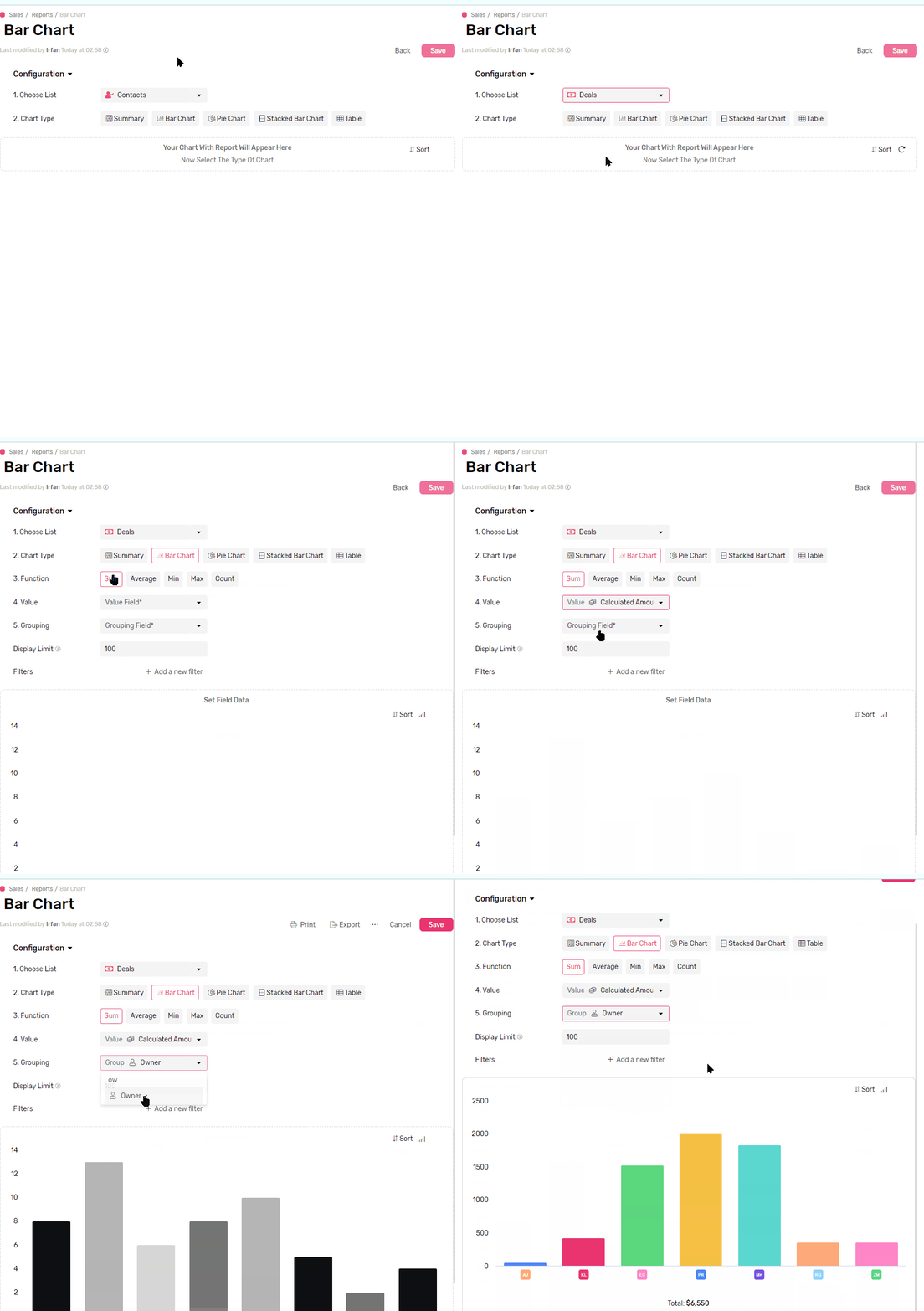
- Under any App, go to reports
- Click + Report
- Name your report
- Select the list you want to get the data from.
- From the Chart Type, select Bar Chart
- Then continue to configure it
Functions
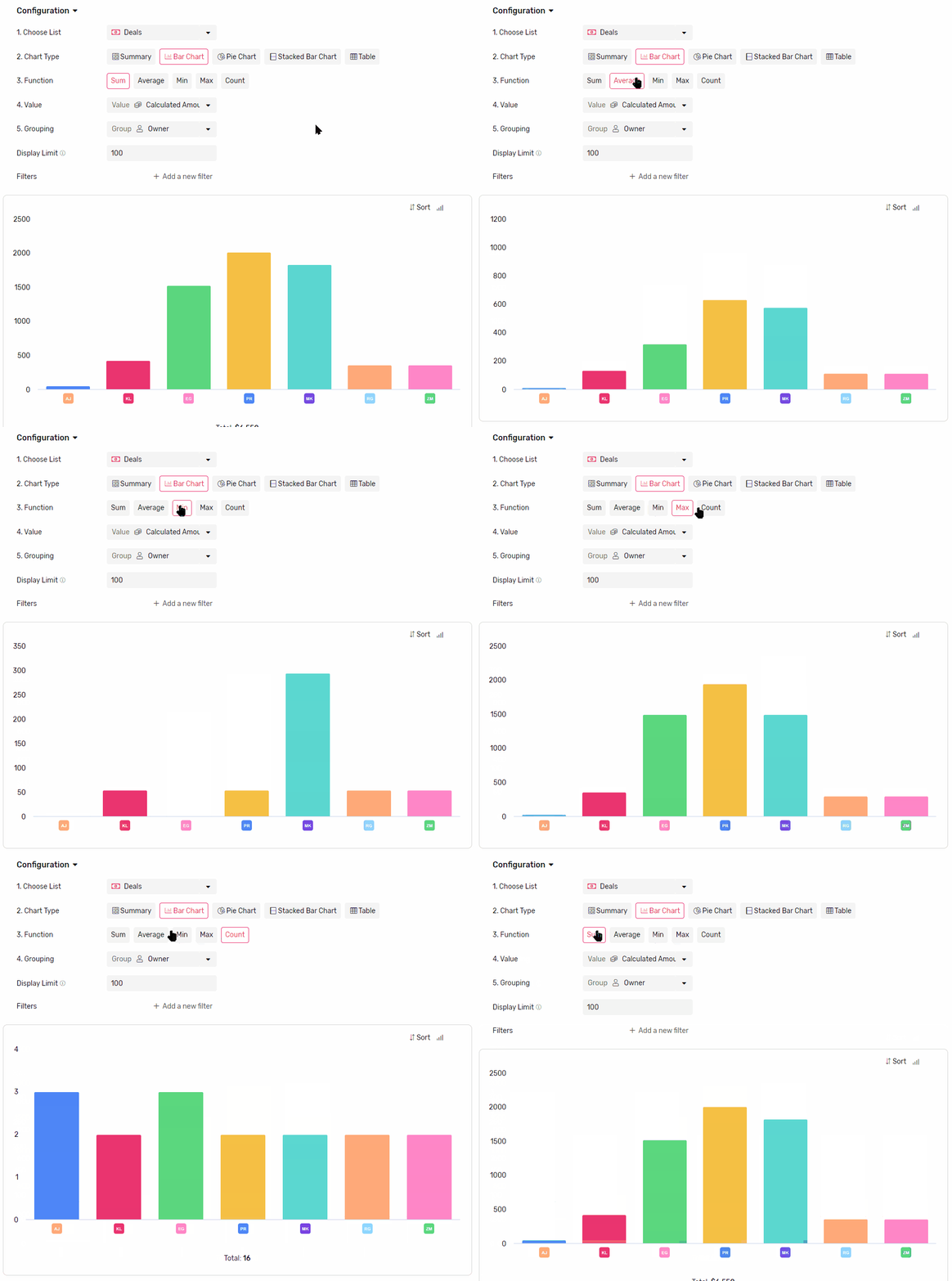
Applying a mathematical function to all values in each group, e.g. get a total of all values, applying a filter later in the configuration will limit the function to work only on the values from records which match the filter.
- Sum will calculate the total of all values in each group.
- Average will calculate the mathematical average of all values in each group.
- Max will retrieve the Maximum value in each group
- Min will retrieve the Minimum value in each group
- Count will count the records which has a value in the selected field
- Count is the only function that accepts all types of fields.
Value
- This is where you select the field that you want the function to run on.
Clustered Bars: Compare Several Values
Show several measures for each group in one Bar Chart, so you can compare them side by side. Under Chart Type, choose Bar Chart; there is no separate chart type for this.
How to Build a Clustered Bar Chart
- Create a report, choose your list, and select Bar Chart under Chart Type.
- Choose a Function.
- Under Value, select your first field, then add more. You can use 2 to 10 fields.
- Under Grouping, choose the field that defines each group.
How It Looks
- Side by side: each value becomes its own bar inside every group, instead of stacking.
- Legend and colors: each value gets its own color and a label in the legend.
- Empty values: empty values are skipped or shown as zero, so the rest of the group stays readable.
Example: Group by Department and add Budget and Actual Spend as values. Every department shows two bars, so overspending is easy to spot.
💡 Tip: Keep to the few values you need to compare. Fewer bars per group read faster.
Grouping
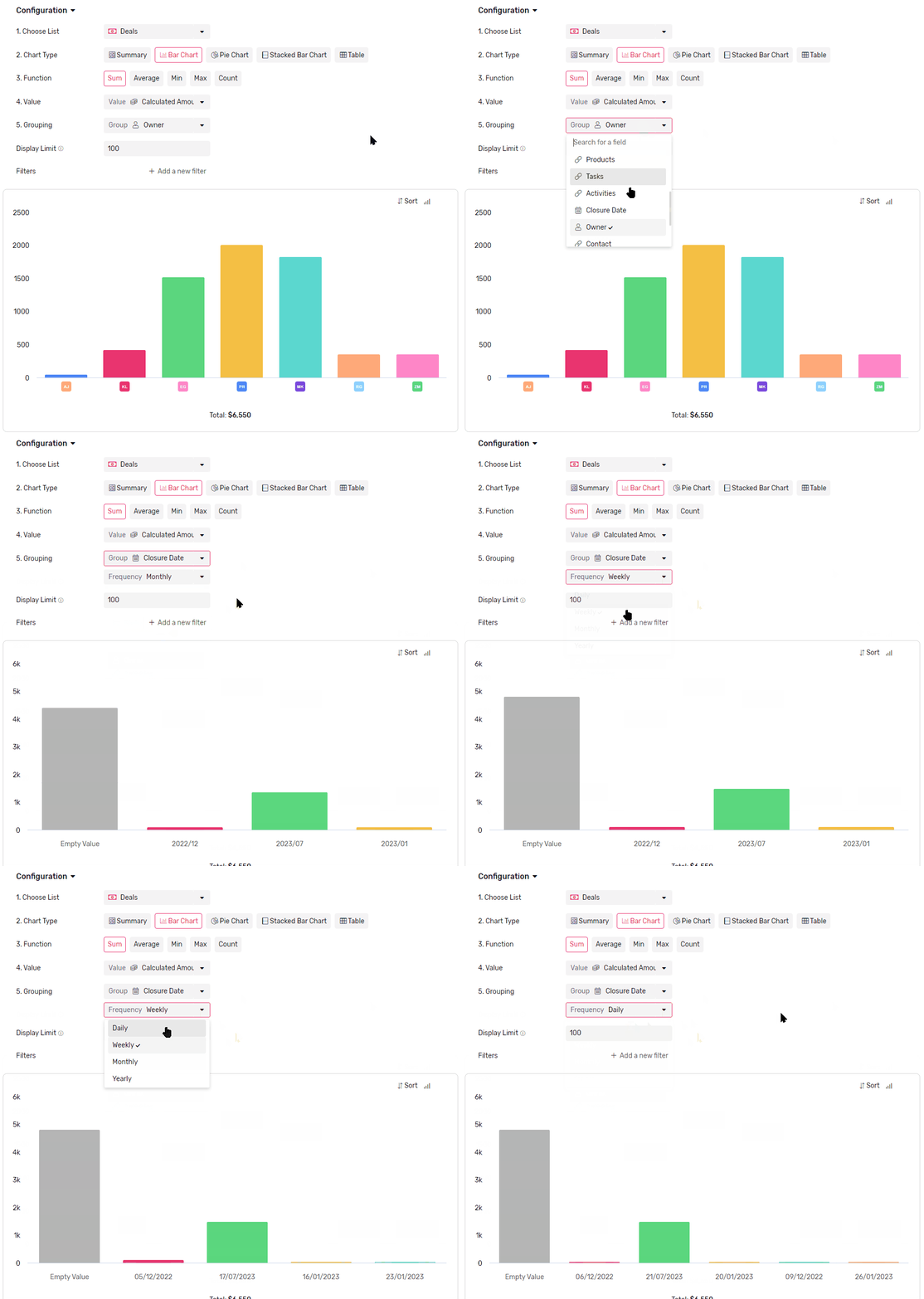
- Select a field to group the data by, each group will be represented by a bar.
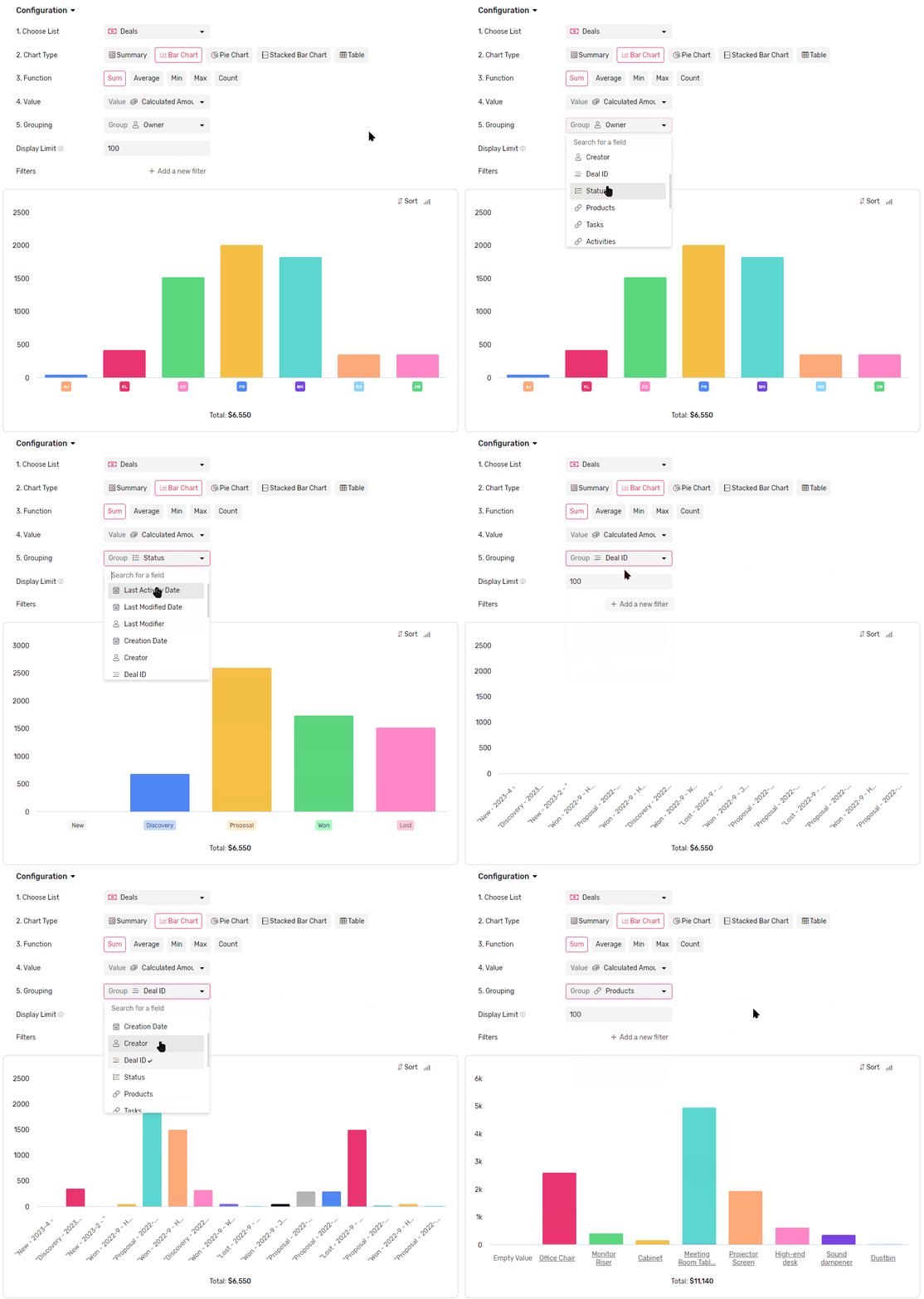
- If you group by a date field you can also set frequency
- Frequency can Daily, Weekly, Monthly or Yearly
- Each bar will represent a time frame determined by the frequency (e.g. if you select weekly, each bar will represent a week.)
Display Limit
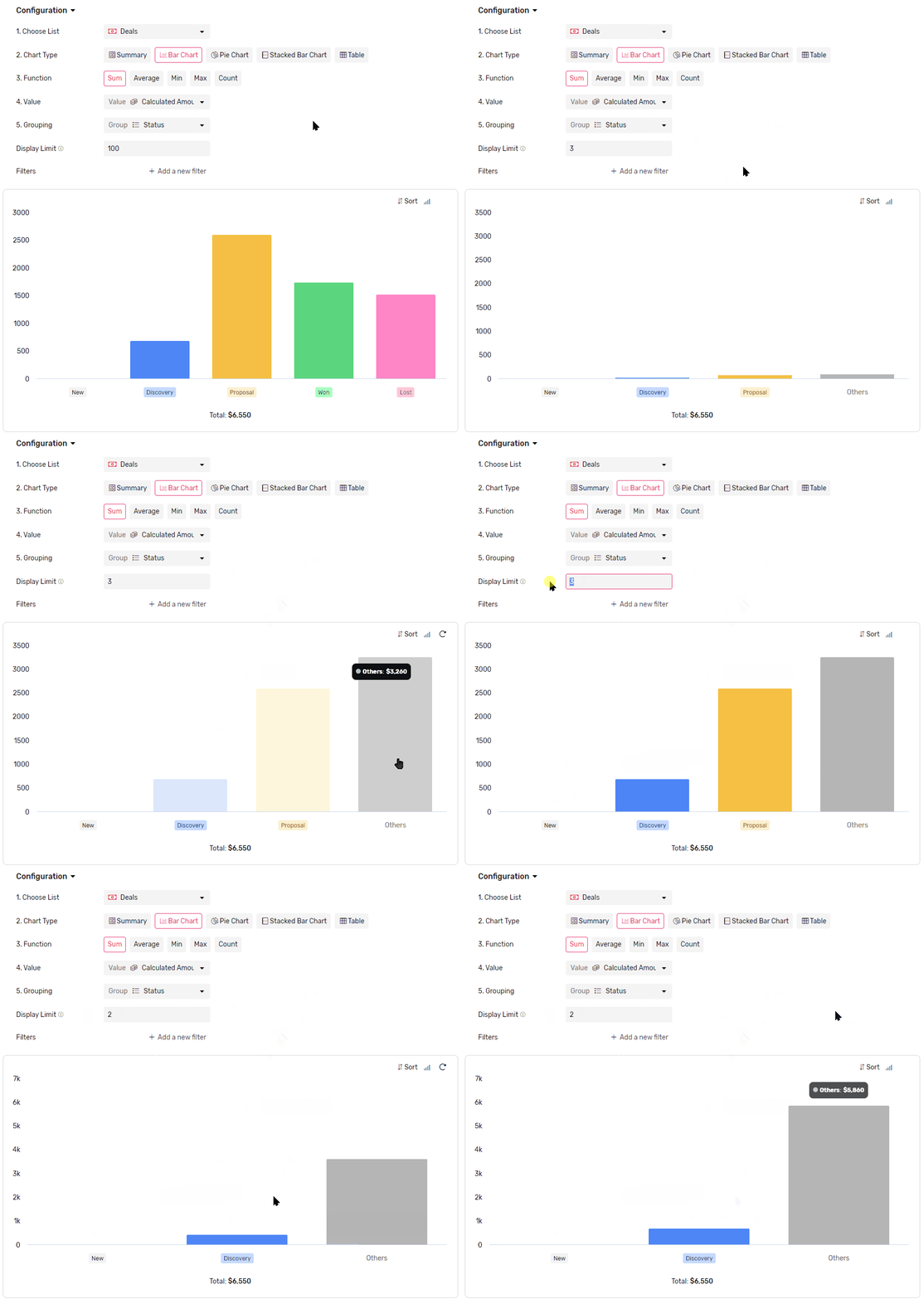
- Limit how many bars are displayed in the chart.
- The maximum number of bars you can see in the chart at a time is 100.
- If there are more groups than the limit the rest of the groups will be all gathered under one bar called others.
- To better control which bars are showing you can use a mix of Filters and Sorting.
Sorting
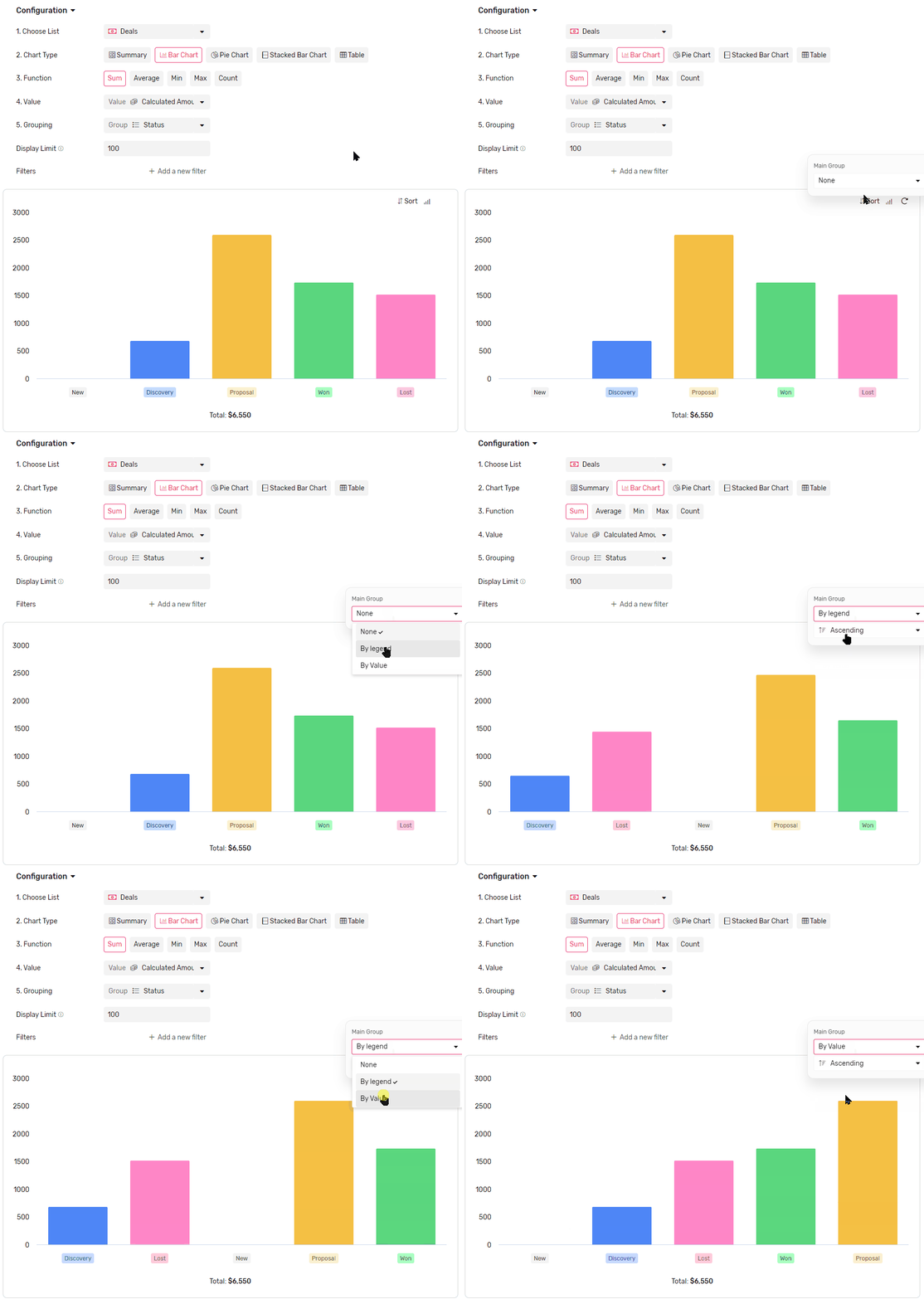
- You can sort your bars either by
- Value, which will sort based on comparing the value represented in the bars.
- Legend, which will sort based on groups labels.
Orientation
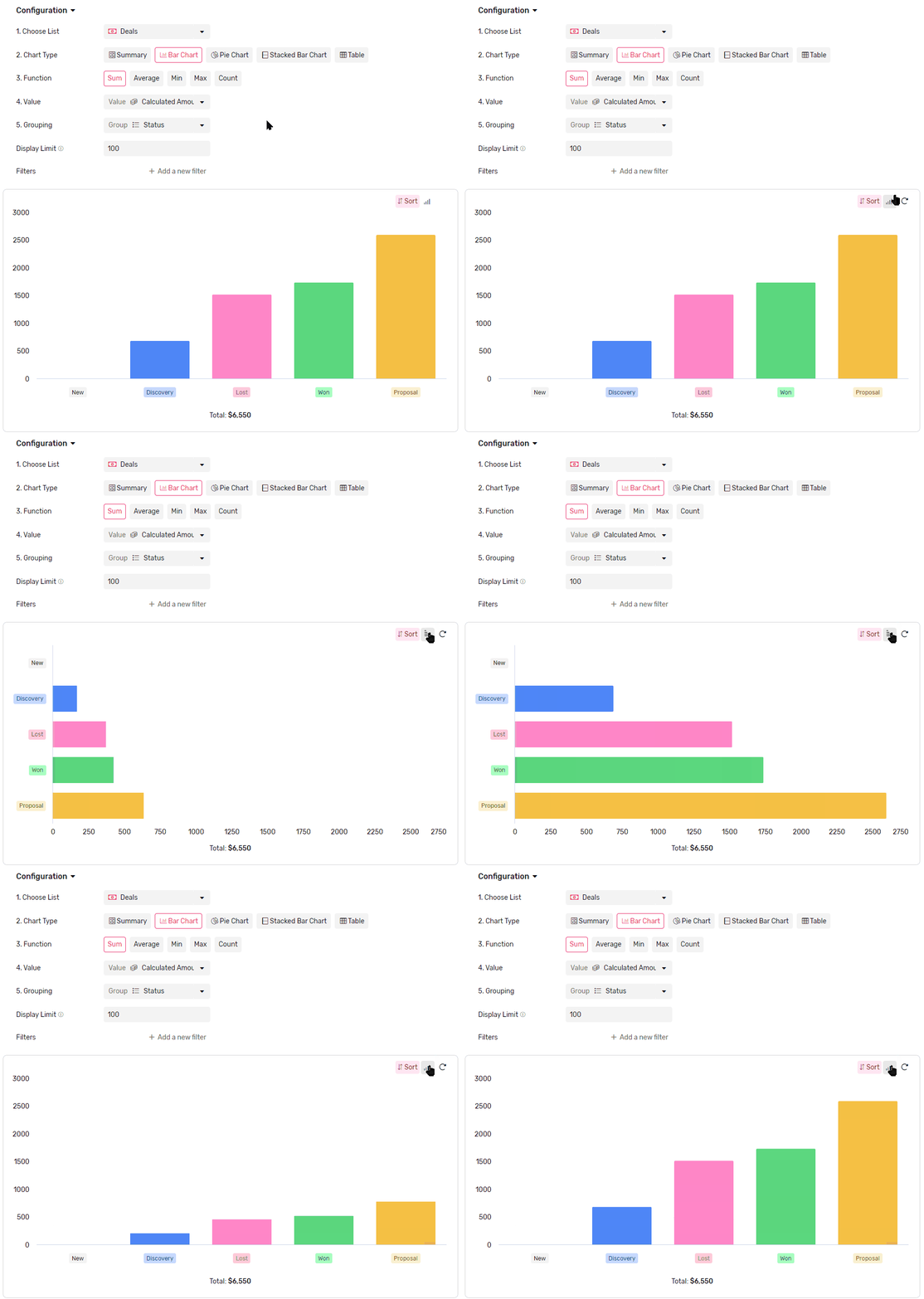
- You can display your bars vertically or horizontally by using this toggle at the top right corner of the graph.
Value Labels and Number Wrapping
Read exact numbers on the chart without hovering, and shorten large numbers so labels stay tidy.
How to Turn Them On
- Open a report and find Report Labels in the configuration.
- Select Show Report Label to show the value on each bar or segment.
- Select Wrapping Numbers to shorten large numbers, such as 1K, 1.5M, or 1B.
- Save the report.
Things to Know
- Use either option on its own, or both when numbers are large.
- They work on every report chart type.
Example: A Sales dashboard bar shows revenue of 1,500,000. With Wrapping Numbers on, the label reads 1.5M, so it fits on the bar.
💡 Tip: Turn on Show Report Label for charts you share on a screen, where nobody can hover.
Distinct Records in Chart Totals
When one record can sit in more than one group, the total can be higher than your number of records. Count charts now show both figures, so you always know how many records you are looking at.
When It Shows
- Create a Bar Chart, Pie Chart, or Stacked Bar Chart report.
- Set the function to Count.
- Group by a field that can put one record in several groups, such as a linked list, multi-user, or multi static list field.
The footer then reads Total: X | Distinct Records: Y, and it includes the Empty Value group. There is nothing to turn on.
Example: A Task Tracker has 10 tasks, and 3 of them have two assignees. Grouped by Assignees, the footer reads Total: 13 | Distinct Records: 10. Each task with two assignees counts in two groups, but only once as a record.
Things to Know
- Free resizing: charts have no fixed minimum or maximum size, and they still adjust to the space you give them.
- Single-row charts: a chart with one row hides the Total: line. Charts with two or more rows still show it.
💡 Tip: Use Distinct Records to count unique records. Total counts each time a record lands in a group.